Lê-dynasty architectural foundations at 36 Điện Biên Phủ site within the context of Lê - dynasty architectural space at the Thăng Long imperial citadel based on Archaeological evidence
Keywords:
architectural foundations, Archaeological evidenceAbstract
The results of excavation, classification, and research conducted at the site of 36 Điện Biên Phủ have identified eight architectural foundation remains. Of these, four date to the Early Lê period (15th–16th centuries) and four to the Lê Trung hưng period (17th–18th centuries). Each period is represented by two types of architectural foundations as well as foundations associated with the walls of the Forbidden City. Within the Thăng Long Imperial Citadel, Lê-dynasty architectural foundations have been recorded in Zone A at 18 Hoàng Diệu, and most notably within the Central Sector of the Imperial Citadel. On the basis of these findings, comparative research into the scale, layout, and structural characteristics of Lê-dynasty architectural foundations across different periods has highlighted the significant role and strategic position of Lê-dynasty remains in the central area. This system of key monuments includes Đoan Môn Gate, the Đan Trì/Long Trì ceremonial courtyard, and the stairways and foundation platform of Kính Thiên Palace. These results have made an important contribution to the identification and interpretation of the spatial context of the Lê-dynasty Kính Thiên Palace from the 15th to the 18th centuries. At the same time, they provide firm archaeological support for the current policy and direction of restoring the ceremonial space of Kính Thiên Palace, demonstrating that this approach is both methodologically sound and consistent with the archaeological evidence from the Thăng Long Imperial Citadel site.Downloads
Download data is not yet available.
References

Downloads
Published
2025-12-31
Issue
Section
Các bài báo




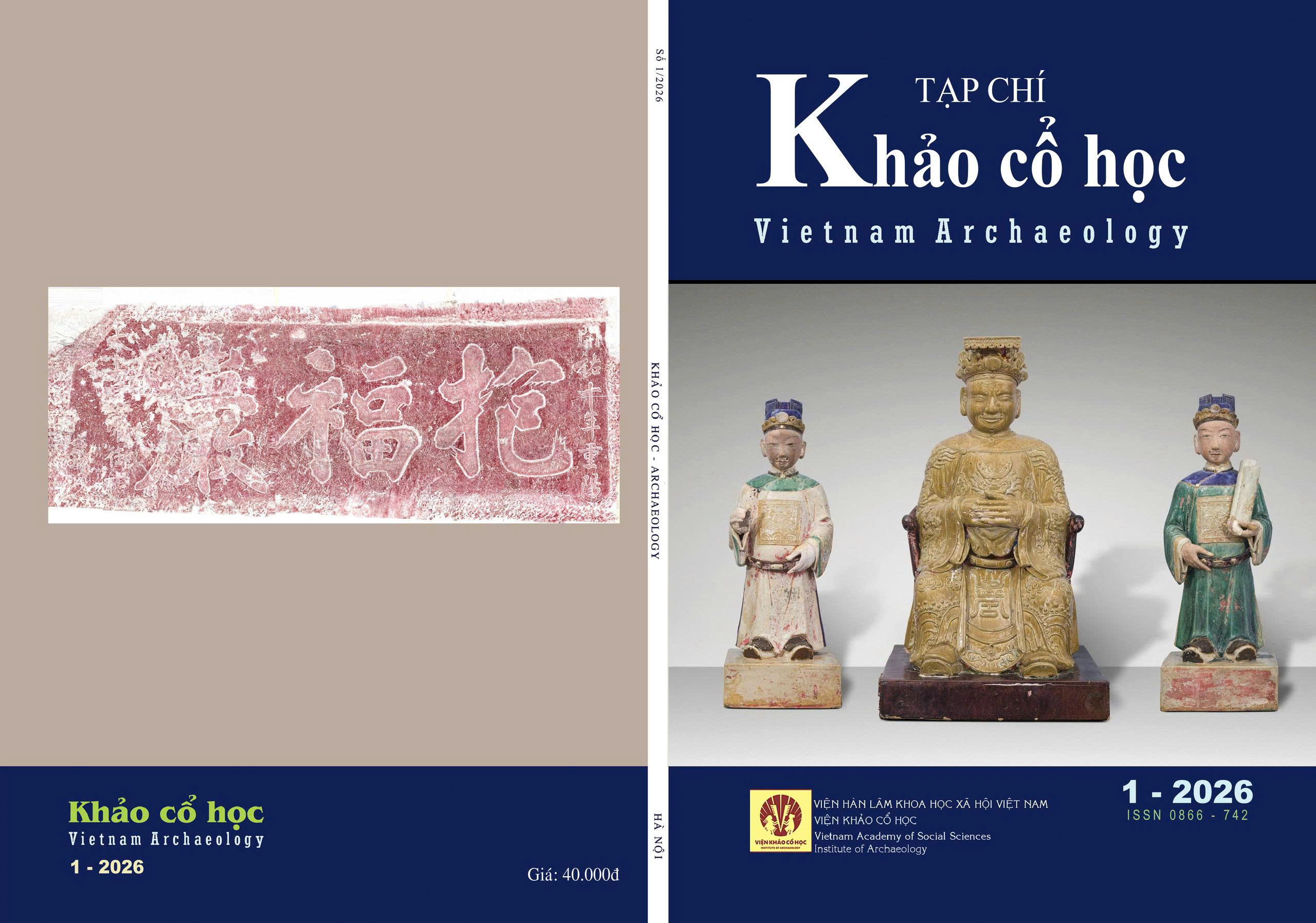




 TẠP CHÍ KHẢO CỔ HỌC - Vietnam Archaeology