Synthesis of archaeological excavation results in support of the reconstruction of Kính Thiên palace and its surrounding spatial context
Keywords:
Synthesis of archaeological excavation results in support, Kính Thiên palaceAbstract
Archaeological excavations conducted in the Central Sector of the Thăng Long Imperial Citadel between 2011 and 2025 have yielded substantial results concerning the remains of the Kính Thiên Palace and its spatial context dating from the 15th to the 18th centuries. These excavation results have provided initial insights into the layout, structural organisation, and architectural characteristics of both the Kính Thiên Palace and its associated ceremonial space. Specifically, the ceremonial space of Kính Thiên Palace is estimated to have covered an area of approximately 30,000m². Within this area, the northern sector corresponds to the Kính Thiên Palace of the Early Lê and Lê Trung hưng periods. Remains currently preserved include the southern stairway platform, featuring four tiers of stone steps carved with dragon motifs, which were crafted in 1467 during the reign of King Lê Thánh Tông. In front of the Kính Thiên Palace lay the Đại Triều Court, together with the imperial processional pathway (Ngự đạo), corridors, enclosing walls, side gates, and connecting pathways linking the side gates. In addition, the excavations uncovered a wide range of valuable artifacts, including yellow glazed and green-glazed roof tiles decorated with dragon motifs, architectural models, and wooden objects dating to the Early Lê period (15th century). Collectively, these architectural remains and artifacts constitute a body of highly reliable material evidence that makes a significant contribution to the ongoing research and reconstruction of the Lê-dynasty Kính Thiên Palace (15th -18th centuries).Downloads
Download data is not yet available.
References

Downloads
Published
2025-12-31
Issue
Section
Các bài báo




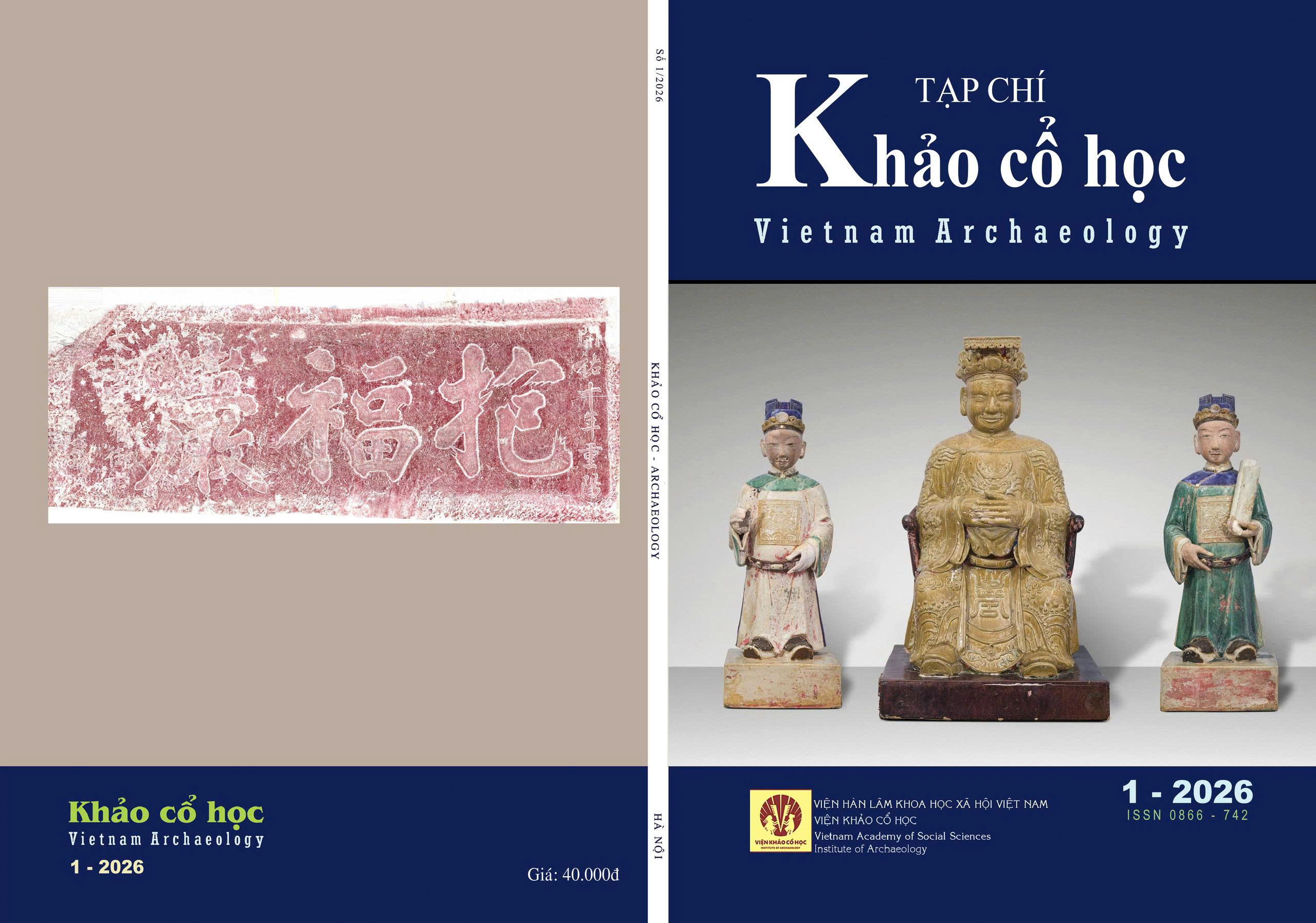




 TẠP CHÍ KHẢO CỔ HỌC - Vietnam Archaeology