Distinctive features and outstanding values of Trần - dynasty brown-decorated ceramic jars from the Thăng Long imperial palace
Keywords:
brown-decorated ceramic jars; Trần dynasty; Thăng Long Imperial Palace; Vietnamese ceramics; ceramic typology.Abstract
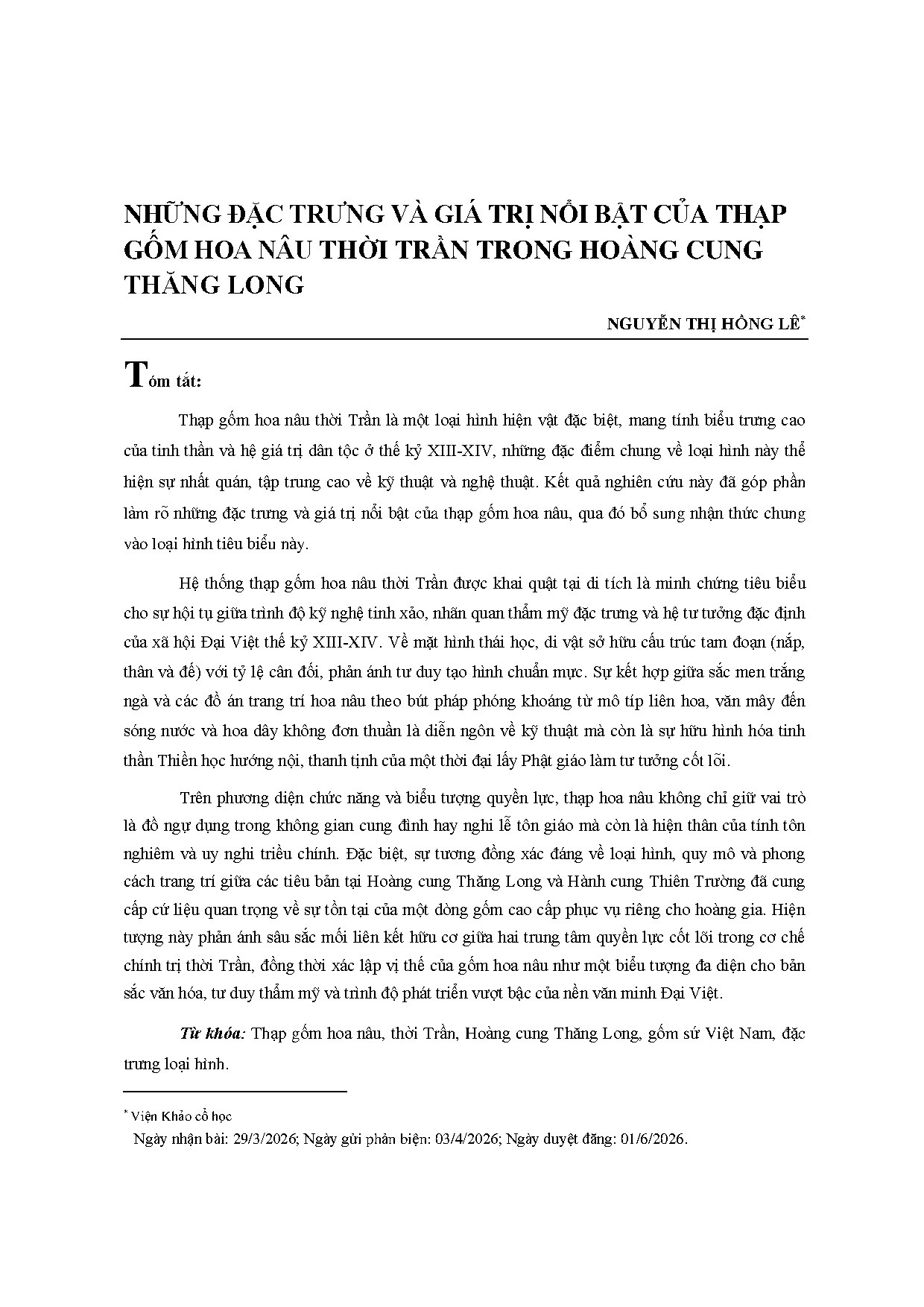
Trần-dynasty brown-decorated ceramic jars constitute a distinctive category of artifacts that embodies the spirit and value system of Đại Việt society during the thirteenth and fourteenth centuries. The shared characteristics of this ceramic type demonstrate a remarkable degree of consistency and sophistication in both technological achievement and artistic expression. This study contributes to a clearer understanding of the distinctive features and outstanding values of browndecorated ceramic jars, thereby enriching current knowledge of this representative ceramic tradition.
The assemblage of Trần-period brown-decorated ceramic jars excavated from the site provides compelling evidence of the convergence of advanced craftsmanship, refined aesthetic sensibilities, and the ideological foundations of Đại Việt society in the thirteenth and fourteenth centuries. Morphologically, these vessels exhibit a tripartite structure comprising a lid, body, and pedestal base, arranged in harmonious proportions that reflect a highly standardized design concept. The combination of an ivory-white glaze with freely executed brown-painted decorative motifs-including lotus flowers, cloud patterns, waves, and scrolling floral designs-not only demonstrates technical mastery but also materializes the inward-looking and contemplative spirit of Zen Buddhism, which formed the ideological core of the period.
In terms of function and symbolism, brown-decorated jars served not only as royal wares within the imperial court and in religious contexts but also as manifestations of royal authority, dignity, and ceremonial prestige. Particularly significant is the close correspondence in form, scale, and decorative style between examples recovered from the Thăng Long Imperial Palace and those discovered at the Thiên Trường Royal Residence. This similarity provides important evidence for the existence of a high-quality ceramic production line intended exclusively for royal use. The phenomenon reflects the organic relationship between the two principal centers of political power during the Trần dynasty and further establishes brown-decorated ceramics as a multifaceted symbol of cultural identity, aesthetic values, and the remarkable achievements of Đại Việt civilization.
Downloads
Download data is not yet available.
References
Additional Files
Published
2026-07-20
Issue
Section
Các bài báo




 TẠP CHÍ KHẢO CỔ HỌC - Vietnam Archaeology